
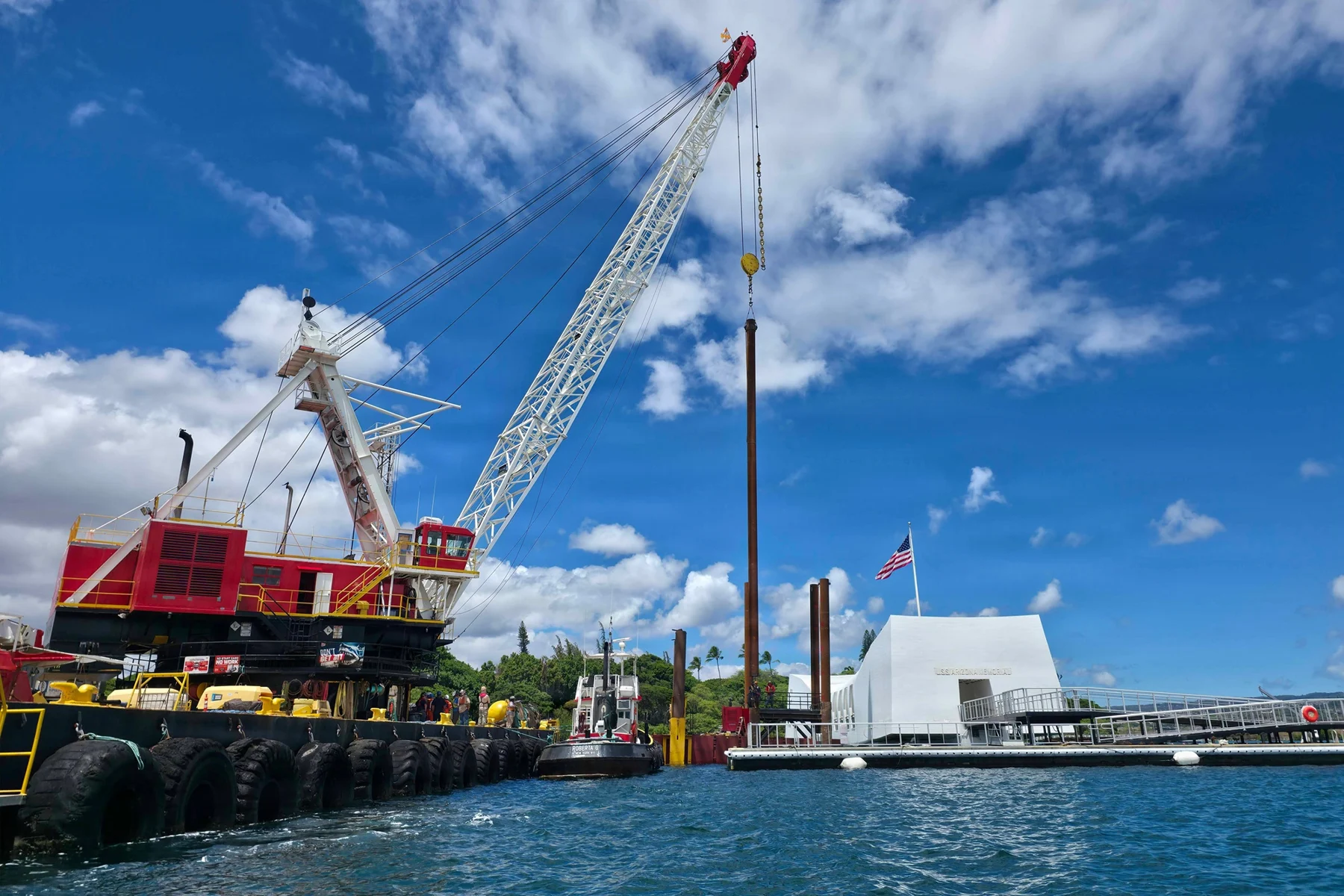
Separate new work from the existing structure
Replacing a pier deck is different from constructing a new seawall or repairing a damaged bulkhead. Describe demolition, excavation, dewatering, piling and concrete work, together with nearby buildings, utilities and occupied waterfront facilities. Identify whether the contractor is responsible for temporary support, access restrictions or maintaining operations during construction. A clear description makes it easier to discuss potential damage to existing property separately from damage to the work itself.
Review construction and marine interfaces
Work may proceed from shore, a temporary platform or a barge, changing the equipment and employee exposures. Review general liability restrictions, watercraft involvement, contractors equipment, installation materials and project property coverage. Consider settlement, vibration, undermining and pollution questions where relevant, without assuming a particular exclusion or endorsement applies. Completed operations and contractual additional insured obligations warrant attention because a structural allegation can arise after project acceptance.
Document responsibility before mobilization
Provide sample contracts, project values, construction methods, subcontracted scopes and the division of design responsibility. Clarify who supplies engineering, who approves deviations and who documents existing conditions. Photographs, surveys, utility information and change-order procedures support the operational story. If the contractor selects an alternative support or drainage design, discuss that role expressly rather than describing all work as installation only. Insurance review and engineering review serve different purposes; neither substitutes for the other.
Watch the related Montridge video
Dock, Pier & Seawall Contractor Insurance: Coverage Every Marine Contractor Should Know
Watch on YouTube ↗Questions worth asking
Is a certificate enough to satisfy a waterfront owner's requirements?
A certificate summarizes insurance. The contract, issued policies and required endorsements must be compared to determine whether the requested protection is actually in place.
Does builders risk cover the seawall automatically?
That depends on the insured project, covered property and form terms. Marine structures, existing property, temporary works and water-related causes of loss need specific examination.